
About Richmond
Founded in 1818, Richmond was a village long before amalgamation folded it into Ottawa, and that history still shapes the streets. The old grid at the centre holds established homes on modest lots, while Perth Street carries the commercial life of the place — Richmond Plaza, the shops, Royals Restaurant, and the traffic that comes with them.
Almost all of the recent growth has pushed north of Perth Street. Hyde Park, King's Grant, and Richmond Oaks brought hundreds of newer houses, and the Western Development Lands keep adding more. With Kanata about ten minutes north and Stittsville and Barrhaven a similar hop away, our drivers usually fold Richmond into a route rather than making a dedicated trip.
Local landmarks & routes we work around: Perth Street, McBean Street, Richmond Plaza, Highway 416, Western Development Lands.
Bin & Dumpster Rental for Richmond Homeowners
In the older village, most bins we drop are tied to renovations that were overdue — a bathroom that has been the same since the seventies, a kitchen going back to studs, plaster and lath coming off a wall that was never insulated properly. With average sale prices around $700K, owners here tend to invest rather than move, and that produces steady, real debris.
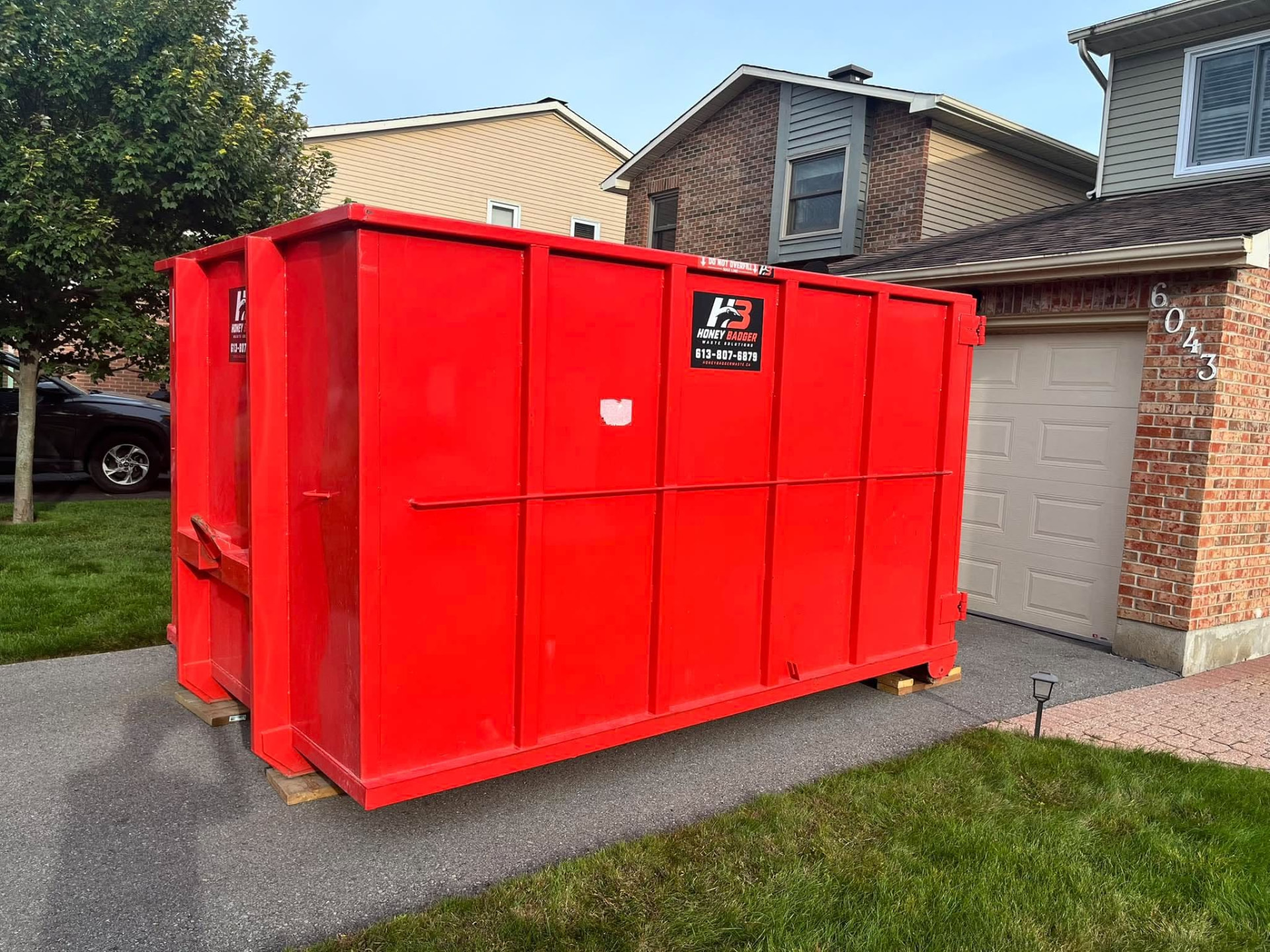
The newer subdivisions generate a different pile: finished basements, decks replaced after fifteen Ottawa winters, landscaping ripped out and redone, garages emptied of everything that accumulated since the closing date. Driveways in Hyde Park and Richmond Oaks are wide enough that a 20 yard rarely causes a problem.
Contractor Bin Service in Richmond
Builders working the Western Development Lands and the subdivision phases north of Perth Street need waste service that keeps pace with framing and finishing schedules. We hold slots for accounts, swap while your crew is still on site, and bill monthly so your bookkeeping stays simple.
Renovation contractors moving between village houses face the opposite challenge: narrow older lots, mature trees, neighbours parked close. We place bins tight and clean on those streets, and we'll walk the approach ahead of delivery if the frontage looks awkward.
Request a QuoteRenovations
Village houses tend to renovate in rounds — a bathroom this year, the kitchen two years later, the basement after that. Single-room work fits comfortably in a 14 yard; a whole-floor gut with old flooring, subfloor, and cabinetry stacking up wants the 20. If the pile outgrows the bin mid-project, we'll swap it rather than let the site stall.
Roofing Projects
Asphalt is heavy enough that weight decides the bin, not volume. Older village roofs frequently hide a second or third layer, which changes the maths quickly, so tell us the roof size and suspected layer count and we'll spec the tear-off bin so it can legally leave your driveway fully loaded.
Roofing bin sizesConstruction Debris
New builds and additions north of Perth Street move fast, and debris volume follows the trade sequence — framing offcuts, then drywall, then packaging and finishing waste. A 20 yard bin with scheduled swaps keeps the lot passable and the site inspection-friendly.
Construction dumpstersJunk Removal
Prefer a full-service crew loading everything for you? We also offer junk removal across Richmond — a great option for estate clean-outs and downsizing when you don't want to lift a finger.
Junk removal serviceChoosing the Right Bin Size in Richmond
Clearing a garage or a single bathroom in an older Richmond home? The 10 yard is enough. Kitchens, basements, and roof tear-offs generally land on the 14. Whole-house renovations, new construction, and big subdivision clear-outs justify the 20 — and out here the driveways almost always have room for it.
Not sure which size fits your project? Check our full bin sizing guide.
All bin sizes & availabilityLocal Considerations in Richmond
A bin sitting on your own driveway needs no permit. Anything placed on the roadway or the City right-of-way falls under City of Ottawa road occupancy rules, and we'll explain the process at booking. On the older grid streets, watch for low branches and shallow shoulders; in newer subdivisions, tell us if the interlock is fresh so we protect it under the bin rails.